Monday, May 26, 2014

Neighborhood Migration

       Throughout the entire month of May, there has been incredible migration at one patch of woods in my development, especially for warblers.  On the first and second day I went down there, I got a lifer warbler, a Wilson's Warbler.  With the Wilson's, there were also many Northern Parula's, many Black-throated Blue Warblers, a few Magnolia Warblers, many Yellow-rumped Warblers, many American Redstarts, many Black-and-White Warbler, many Common Yellowthroats, a few Chestnut-sided Warblers, and a Black-throated Green Warbler. 
Wilson's Warbler

Wilson's Warbler

Magnolia Warbler

American Redstart

Common Yellowthroat
 
Black-and-White Warbler


     The next few days added on a few more warbler species for us.  Those were Northern Waterthrush, and Bay-breasted Warbler.  We also got a new neighborhood bird and life bird, a Least Flycatcher.
 
Northern Waterthrush

Bay-breasted Warbler

Bay-breasted Warbler


     Towards the end of May, the numbers of Blackpoll and Canada Warblers greatly increased.  We also got a new neighborhood bird and life bird for my mom, a Black-billed Cuckoo. Along with these birds, the number of Ruby-throated Hummingbirds had also increased. 
Canada Warbler

Canada Warbler

Blackpoll Warbler

Black-billed Cuckoo
 
Ruby-throated Hummingbird


     So far it has been a great May with 16 warbler species and a few life birds.


Sunday, May 4, 2014

Migration at Churchville Nature Center and Baldpate Mountain

    On Saturday (5/3/14) my mom, my aunt, and I went to the bird walk at the Churchville Nature Center.  We got a total of 71 birds beating our previous record of 70 birds.  The highlights were a Horned Grebe, a Worm-eating Warbler, many Black-throated Blue and Black-throated Green Warblers, a few Northern Parulas, two Blue-headed Vireos, and five Orchard Orioles.
One of the two Blue-headed Vireos

One of the five Orchard Orioles

Horned Grebe

Ovenbird


     After the walk, we went to Baldpate Mountain.  There we immediately heard and saw multiple Blue-winged Warblers, many Black-and-White Warblers, a Yellow-throated Vireo, a few Yellow Warblers, and a few Black-throated Blue Warblers.
Blue-winged Warbler

Blue-winged Warbler singing

Black-throated Blue Warbler


Wednesday, April 23, 2014

Missing a Bird but Seeing Another

   On Friday (4/18/14), my mom, brother, aunt, and I headed down to Clinton, NJ to try to see a previously reported Neotropic Cormorant.  We first stopped at Spruce Run Reservoir, where it was first seen.  We pulled into the first parking lot we saw.  Although we did get a few awesome Horned Grebes and a rare Red-necked Grebe, we did not see the Cormorant.  We then pulled into the next lot we saw... nothing.  Then the next lot... nothing.  The third lot we did pull into however, did not have the Cormorant, but a few good early warbler species.  We got Palm, Pine, and Yellow-rumped Warblers and a very cooperative Blue-grey Gnatcatcher.
Blue-grey Gnatcatcher

Blue-grey Gnatcatcher

Blue-grey Gnatcatcher

Blue-grey Gnatcatcher


     After seeing those warblers,  we stopped at another place it was seen, Demont Pond.  After a few minutes of looking... nothing.  Then we stop at another pond it was seen on.  We did not get the bird, but we did get great looks of a Palm Warbler.
Palm Warbler

Palm Warbler


     The last spot we stopped at was Round-valley Reservoir.  When we pulled in to the parking lot and started to eat our lunch, I immediately dropped my sandwich and ran down to the edge of the water with my camera.  I saw an adult Horned Grebe in almost total breeding plumage.  I had been trying to get a good picture of one for a year so no matter how uncooperative he was being, I kept trying.  As he hugged the shoreline, I went down to try and get a picture.  As I got closer, he got farther away.  After following him up and down the shoreline multiple times, I went back up towards the car.  I stopped for another minute just to see where he would go.  I watched him go farther and farther away from the shore when out of nowhere, he made a complete 180 degree turn and started swimming right at me.  Trying not to spook him I left my camera down and slowly inched only another foot forward.  When he got as close as possible, I brought up my camera and started snapping away.  When he dove, I rushed down to the shore trying to get as close as possible undetected.  He popped up right in front of me.  I brought my camera up and when I tried to take the first photo the camera read "card full".  I was devastated, however I did manage to get a couple good shots.
Horned Grebe

Horned Grebe


The Grebes of Lake Nockamixon

    On Wednesday (4/16/14), my mom and I headed over to lake Nockamixon to try to get pictures of the Horned Grebes.  When we first got there, we immediately saw a Horned Grebe.  After taking many pictures, we stopped at the next parking lot and saw five Common Loons in breeding plumage.  After that, we stopped at our last parking lot.  On the drive in to the lot, we saw a Broad-winged Hawk perched in a tree right over the road.  After that we went all the way in and I immediately saw another Horned Grebe.  After taking many pictures we started walking back to the shore from the car.  However I saw another grebe-looking duck right near the shore.  So I headed back down only to see that it was an Eared Grebe in winter plumage.  I called my mom back down and we both got incredibly good looks at this incredibly rare bird.
First Horned Grebe

Two of the five Common Loons

Broad-winged Hawk

Eared Grebe

Eared Grebe

Eared Grebe

Eared Grebe (Back)  Horned Grebe (Front)


Monday, April 14, 2014

A Great Weekend at Peace Valley Nature Center

     On Friday (4/11/14) I went to Peace Valley Nature Center to try and see the Red-necked and Horned Grebes.  After looking around for a while, we pulled up in another parking lot only to see an adult Common Loon in breeding plumage swimming in front of us.  I jump out of the car and immediately start taking pictures.  After a while, he starts heading down the lake.
Common Loon

Common Loon


     The next day, I go back for a longer period of time to see if it, or any of the grebes, are still there.  Sadly, I did not see any of them.  However, after walking around for almost two hours and getting my first of the year Blue-grey Gnatcatcher, I see that there was an American Bittern seen by the bridge that day.  I head down hoping to see one behind some brush a ways away, but see a group of people looking down at something only about five feet away.  I walk up and they say that there is an American Bittern right there.  However, they have scared it down behind the heavy brush.  After waiting for about twenty minutes for it to come out, it finally does.  As I watch it for over an hour waiting for my mom and two of my aunts to get there and see it, it comes right out into the open.  They get there just in time to see it right out in the open.
American Bittern

American Bittern

American Bittern out in the open


Friday, March 14, 2014

Woodcocks During the Day

     After the successful timberdoodling in my backyard for the paste few days, I went out to try and find these incredibly well camouflaged birds during the day so I could get a better picture.  During the day they rarely move, but they let you get very close.  This makes it much harder to see them. 
     Since I knew where they were I headed to the area where they generally had been displaying in the night.  In about five minutes  I came to a clearing in the thicket and stopped to look around.  I looked down a promising deer path surrounded by heavy brush.  I did not see anything so I looked in another direction.  After a minute or two I looked back down the path to see a Woodcock sitting absolutely still in the middle of the path.  I couldn't believe that I was standing only five feet away from an American Woodcock!
American Woodcock

American Woodcock


     After admiring this bird for about twenty minutes before it walked into thicker brush, I brought my mom and little brother out to see it also.  Sadly we did not see this bird.  However we kept looking in other spots and saw another Woodcock bob-walking into the thicket from a field on the other side.  We were lucky enough to see that same Woodcock from the other side of the thicket after it walked into the thicket after seeing it walk into the thicket too.
Second Woodcock behind brush

Second Woodcock sitting down


     After seeing the second Woodcock with my mom and brother, my aunt was lucky enough to have seen it in the same spot.


Wednesday, March 12, 2014

Duck Migration at the Churchville Nature Center and Looking for Woodcocks in my Backyard

     As soon as I got home from school, my mom took me to the Churchville Nature Center to have a chance to see and photograph a male Canvasback.  We arrived at the location where all the ducks were being seen at the nature center.  I immediately hopped out of the car and crept up to the water.  The waters edge was covered by Common Mergansers and Ring-necked Ducks.  Out farther on the lake was the male Canvasback.  I sat down at the edge of the lake and started to take pictures of all of the duck species. 
Male Canvasback

Male and Female Lesser Scaup

Male Common Merganser

Male Ring-necked Duck


     While I was photographing the Canvasback, two male Hooded Mergansers swam out in front of me showing off their beautiful black and white head plumage. 
Hooded Mergansers

Hooded Mergansers

Hooded Mergansers


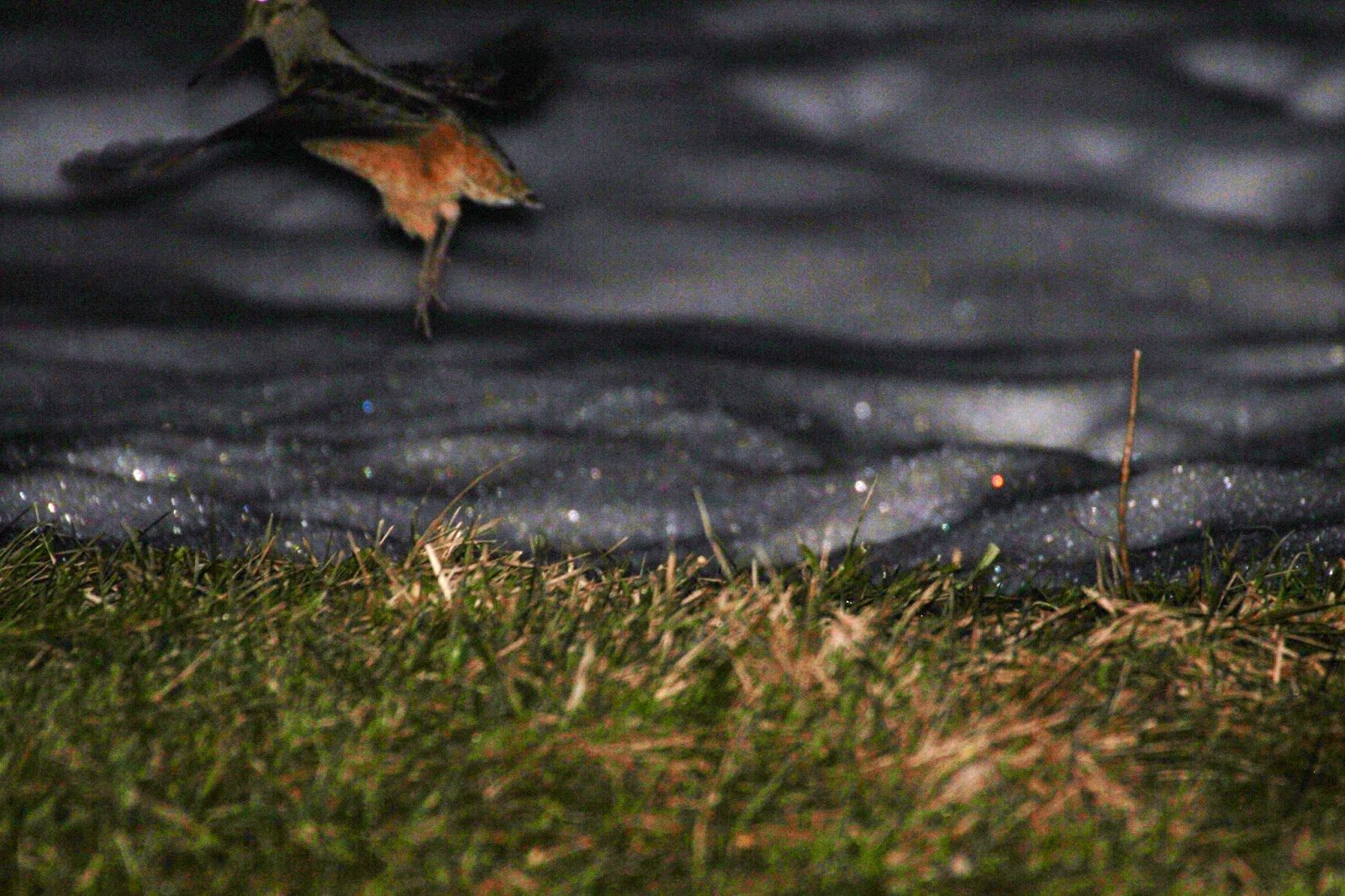
     When we got home I had known from past experience that there were American Woodcocks that do their mating dance in my backyard around the beginning of March.  I kept opening my back door and peeking my head out for about five minutes to hear if the Woodcocks were "peenting".  This night I was more confident that I would hear them because I had heard cycles of different bird species calling as I had heard in other successful "Woodcock hunts".  First it was silent, following that, it was incredibly active with sparrows and cardinals chipping.  After that, it would be silent again for about three minutes, and then the first Woodcocks would start peenting.  That night, 3/11/14, I heard the first Woodcock at about 7:18 pm.  It is not always the same exact time, but it is generally always around then.  Soon, they would begin to do their flight display, this I have never seen before, but yesterday I did.  Two Woodcocks would fly up very high and hover inches away from each other for a few minutes.  They would then land back on the ground and start the cycle again. 
     I have never had a chance to photograph them either because it was always dark when they displayed.  But this time I had my brother come out with me with a flashlight.  With that along with the camera flash, I was able to get a pitch black picture with some eye shine.  However, I brightened it on the computer and could successfully see the bird.
American Woodcock

American Woodcock flying away